
You blow your hair out. It looks beautiful. You walk to the car, and by the time you get where you’re going, it has puffed, waved, and gone soft at the root. If that’s your July, you already know what a Massachusetts August has in store.
Keratin smoothing is the service most clients ask about when the humidity hits — and it’s also the service most often misunderstood. So here’s the straight version: what a keratin treatment in Massachusetts actually does to your hair, how long it really lasts, and the clients we talk out of it.
Why Massachusetts Humidity Is So Hard on Frizzy Hair
Frizz isn’t a character flaw in your hair. It’s chemistry. Hair is porous, and on a high–dew point day it pulls moisture straight out of the air. That water swells the hair shaft, lifts the outer cuticle layer, and the smooth surface you spent 25 minutes creating with a round brush comes apart.
New England makes this worse than most places. We get sticky inland afternoons in Worcester County, ocean air on the North Shore and the South Shore, and a commute that can put you in and out of air conditioning four times before lunch. The more porous or textured your hair, the faster it reacts.
You can fight that every single morning with product and heat. Or you can change how your hair behaves in the first place.
What Keratin Smoothing Actually Does
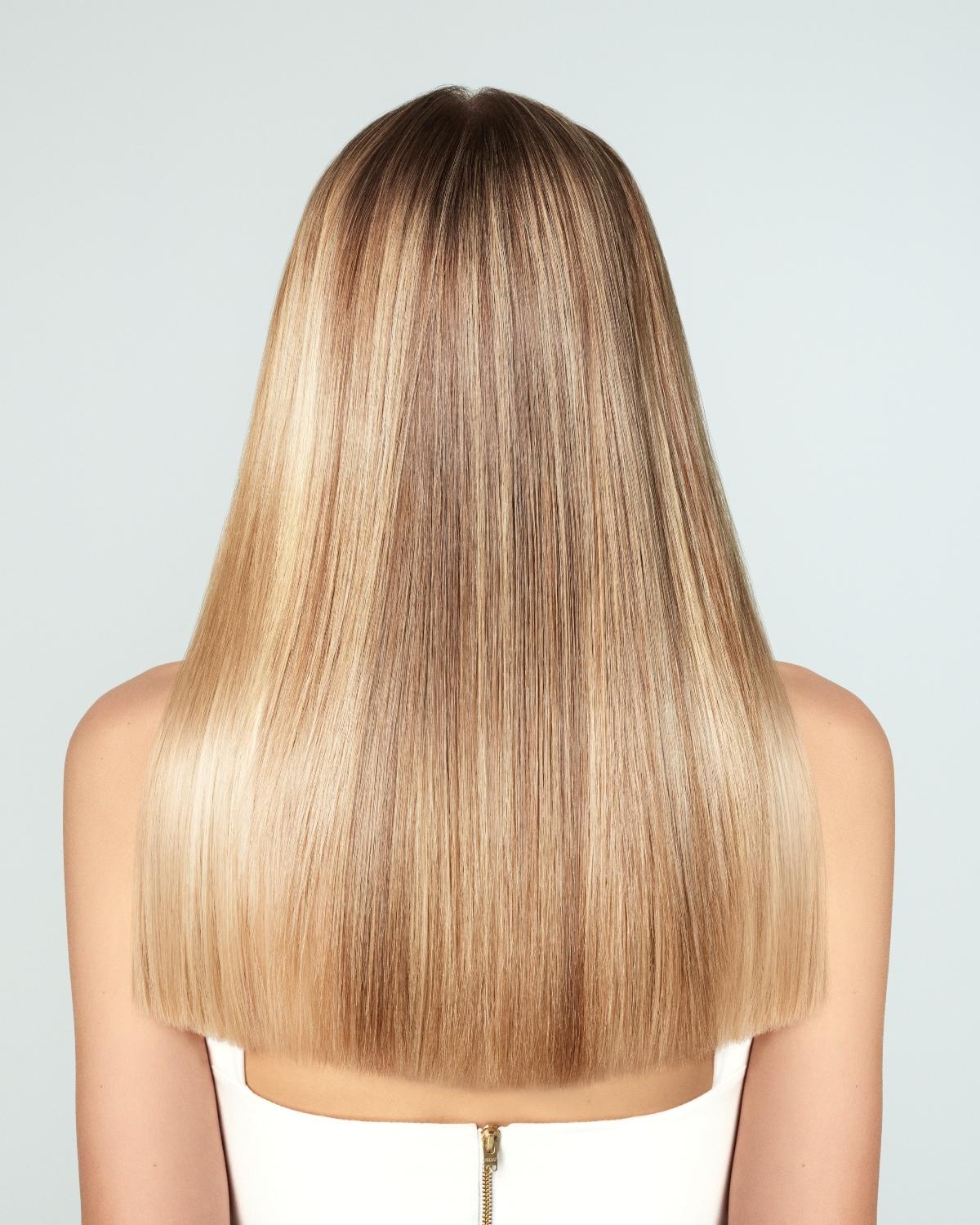
A keratin smoothing treatment replenishes keratin — the structural protein your hair is largely made of — and seals it into the hair with heat from a flat iron. The cuticle lies flat instead of standing open. The result is hair that no longer grabs at every bit of moisture in the air.
What changes day to day
- Frizz drops sharply, including on humid days — which is the entire point.
- Blow-dry time gets shorter. A smoother cuticle dries faster and cooperates. Clients routinely cut their styling time by a large chunk.
- Hair is softer and shinier, with the polished, glassy finish clients keep asking us for.
- Curl loosens. Depending on your texture, waves relax and tight curls become far more manageable.
How long it lasts
Results typically hold for two to six months, depending on your hair type, the treatment used, and — this is the big one — how you take care of it at home. It fades gradually. There’s no hard grow-out line the way there is with a relaxer, so you never hit a point where your hair looks like two different services stacked on top of each other.
What It Doesn’t Do
This is where expectations go sideways, so let’s be blunt.
It is not a permanent straightener. Keratin smoothing calms and relaxes your hair. It does not chemically restructure it into pin-straight hair forever. If you blow it out, it will go straight beautifully and easily. If you air-dry it, you’ll get a smoother, more polished version of your own texture — not a flat iron finish with no effort.
It is not a damage repair service. Smoothing improves how damaged hair looks and feels. It does not glue split ends back together or undo years of over-processing. Hair that’s actively breaking needs a different plan first — usually bond-building and conditioning work through our treatment services, and often a fresh cut.
It is not a fix for a color problem. Brassy, banded, or botched color is a different conversation entirely — that’s color correction, and it comes first. Smoothing bad color just gives you shinier bad color.
Who Keratin Smoothing Is Wrong For
We turn clients away from this service every week, and we’d rather do it at the consultation than after you’ve paid for it. Smoothing is probably the wrong call if:
- Your hair is already healthy and manageable. If your hair behaves and you just want more shine, you likely need a shine enhancement or a deep conditioning treatment — not a smoothing service. Don’t buy a solution to a problem you don’t have.
- You love your curl pattern. Smoothing loosens curl. That’s not a side effect, it’s the mechanism. If your curls are the point, keep them and take care of them properly instead.
- You want permanently straight hair with zero styling. That’s not what this is, and no honest stylist will tell you otherwise.
- Your hair is severely compromised. If it’s breaking, gummy, or badly over-processed, it needs to be rebuilt and cut back to health before anyone adds heat and chemistry to it.
- You’re not going to follow the aftercare. If you’re committed to your drugstore sulfate shampoo, your results will fade fast and you’ll feel like you wasted your money. Fair enough — but know that going in.
- You have chemical sensitivities or health concerns. Some smoothing formulas on the market contain formaldehyde. At Dellaria we offer a Framesi treatment with no added formaldehyde for clients who want to eliminate that issue as much as possible. Tell your stylist about any sensitivities, allergies, or health concerns at the consultation — including if you’re pregnant or nursing, in which case check with your doctor first.
The Aftercare Decides Whether It Lasts Two Months or Six
This is the difference between the client who tells her friends it changed her life and the client who says it “kind of wore off.” Same service. Different aftercare.
- Switch to a sulfate-free shampoo. Sulfates strip the treatment out. This is the single biggest factor, and it’s not optional.
- Follow the wash window your stylist gives you. It depends on the formula used on your hair — some allow washing right away, others need a waiting period. Your stylist will tell you exactly what yours needs.
- Be smart about salt and chlorine. A summer of unrinsed ocean and pool water will shorten your results. Rinse your hair with fresh water before and after you swim.
- Keep your color and cut on schedule. Smoothing makes hair easier. It doesn’t replace maintenance.
How to Find Out If You’re a Candidate
Texture, density, porosity, color history, and how much damage is already in your hair all change the answer — and none of that can be assessed over the phone or from a photo. That’s why smoothing starts with a consultation. Your stylist looks at your hair, asks what your mornings actually look like, and tells you honestly whether this service will do what you want it to.
And if it won’t, we’ll tell you that too. Sometimes the right answer is a better cut — the kind we walked through in The Summer Haircut Reset — and nothing more.
Keratin smoothing is available at select Dellaria locations across Massachusetts, from Boston to the Cape. Find your nearest salon and book a consultation, or learn more about keratin smoothing at Dellaria.
A credit card is required to reserve an appointment. Cancellations made less than 24 hours before your appointment may be charged a minimum of 50% of the services booked.
Keratin Smoothing FAQ
Will a keratin treatment make my hair completely straight?
No. Keratin smoothing relaxes and calms the hair rather than permanently straightening it. Curls loosen, frizz drops, and your hair becomes far easier to blow out straight if that’s the look you want. If you air-dry, expect a softer, more polished version of your natural texture — not a flat iron finish.
How long does keratin smoothing last?
Results typically last between two and six months depending on your hair type, the treatment used, and how you care for your hair at home. It fades gradually rather than growing out with a hard line, so there’s no awkward demarcation.
Does keratin smoothing contain formaldehyde?
Some smoothing formulas on the market do. At Dellaria we offer a Framesi treatment with no added formaldehyde for clients who want to eliminate that concern as much as possible. Tell your stylist about any sensitivities or health concerns at your consultation.
Can I get a keratin treatment if my hair is colored?
In most cases yes, and many clients pair the two. Sequence and timing matter, though, so your colorist plans both services together rather than deciding on the fly. Bring it up when you book.
How do I know if keratin smoothing is right for my hair?
Book a consultation. A stylist needs to see your hair’s texture, density, condition, and color history in person before recommending a smoothing service. If your hair doesn’t need it, we’ll tell you.