Root Touch Up & Hair Color Maintenance ~ Dellaria Salons

Root Touch Up & Hair Color Maintenance

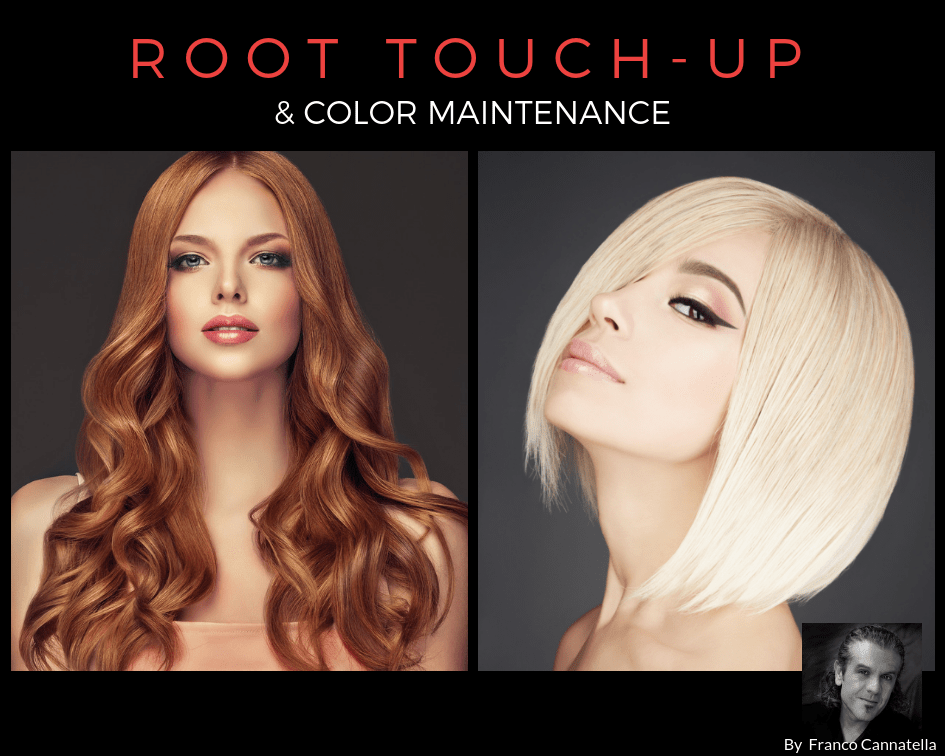
Yes…Roots, or more technically speaking Maintenance. Eventually, they begin to show. Depending on how fast your hair grows, roots typically appear two to three weeks following color service. How often you should touch up your root color depends on the difference between your dyed and natural color.

When to Get a Root Touch Up

Roots are the first thing you notice about someone’s hair. Harsh contrast naturally draws the eye. Furthermore, nothing ruins perfect blonde highlights like showing roots. If you’re naturally dark but have lightened hair, roots show quicker. Most people schedule root touch ups four to six weeks apart.

If you’ve asked your colorist how to go about breathing life back into your dull strands, your colorist may have recommended hair glaze/gloss/balancing.

It’s About The Ends Too

Color dulls. Especially at the ends. Root and end touch up often go hand in hand. When your stylist touches things up top, sometimes they will refresh your ends too. The combination keeps your color looking new.

See the Same Stylist for Perfect Color

Seeing the same stylist that did your original color is essential for the perfect touch up. Matching another stylist’s color can be tricky, most notably if the new stylist uses a different color line. For best results and seamless touch up, stick with the stylist who did your initial color.

What is the difference between a glaze/gloss and color balance?

There are several factors that would dictate whether to glaze/gloss/balance or not depending on the hair’s porosity, density and desired outcome.  Glaze/gloss will provide more transparency to the overall look, so if you are a blonde and want to “juice” up your tired ends for over styling or sun exposure there are shear options so that you don’t lose the brightness in your blonde.  Color balance means that you are going to marry the root, middle and ends so that they are seamless.  Both options have fluctuating degrees of durability and color contrast with increased reflections and light movement.  All glaze/gloss and color balance services provide an added condition and shine to the hair, (these are very different than toners) Glaze/gloss/balance should never be done with left over retouch color just for the simple fact that re-growth color is designed for virgin hair, with or without gray, and glaze/gloss/balance is designed for already colored hair (previously colored treated).

In the beauty world, glosses and glazes are both hair treatments that add shine back to your hair, but they do have some small differences that are important to consider. Which one you choose depends on what your specific hair needs are.

Glaze/Gloss

Glazes can be clear to just add shine, or they can have some pigment to complement the tone/reflection of your hair color. Glaze/Gloss does not contain peroxide or ammonia (but in Framesi World Mix-color can turn ammonia-based color to non-ammonia). It simply coats or sits on top of the hair. Incapable of deposit permanently or lift color.

How long do they last?

1-4 weeks.

Why should you get a hair glaze/gloss?

A glaze/gloss is used when the objective is primarily to give the hair that extra shine or give the color a slight boost. It fills the hair, closes the cuticle, and create a smooth surface that light bounces off for immense shine. It’s like the energy drink of hair color.

How often should you get a glaze?

A glaze should be a part of your salon regimen. You should get one on every hair color appointment. Most colorists work this into your treatment—you might be getting one without even knowing.

Balance

One or more tone/shade lighter than the root application. This service will replenish the previously colored treated hair with the pigment loss/fade since the last color visit. Balance might contain a developer (oxidation) and no ammonia (but in Framesi World Mix-color can turn ammonia-based color to non-ammonia). As a result, the hair color will re-acquire its richness, luminosity and the vibrancy in tone/shade, commonly lost with oxidation from the elements. 

How long do they last?

1-4 weeks.

Why should you get a hair balance?

A balance is used when the objective is primarily to give the hair that extra shine or give the color a slight boost. It fills the hair, closes the cuticle, and create a smooth surface that light bounces off for immense shine.

How often should you get a glaze?

A balance should be a part of your salon regimen. You should get one on every hair color appointment. Most colorists work this into your treatment—you might be getting one without even knowing it.

2 thoughts on “Root Touch Up & Hair Color Maintenance

  1. I like how you mentioned some ways to be able to take care of colored hair, and the first thing you talked about is getting a root touch-up six weeks after the procedure’s been completed. This is in order to make sure that the color is holding strong and that the hair is still as healthy as it can be before the color begins to grow out–especially at the tips of the hair. If I were given the chance to color my hair, then I would have to make sure that I would also be getting my hair checked up every so often so that the color would last much longer.

  2. When the client came to me, she had been bleaching her hair. The first time I colored it I used a Demi permanent. The color didn’t last very long. The next time I colored it, I used a filler first then put the color on. It lasted longer, the ends still lightened up though. This time she wants to change her color. We were doing a burgundy color, now she wants it to be black. Should I fill her ends this time again to help keep the color longer. My client is half African American and half white. Her hair is very curly, the bleach destroyed it. Her sweet sixteen is this week that’s why she wants to color it. After that we are going to cut it off. What do you suggest? Sorry I was so long winded. Lol

Leave a Reply

Your email address will not be published. Required fields are marked *


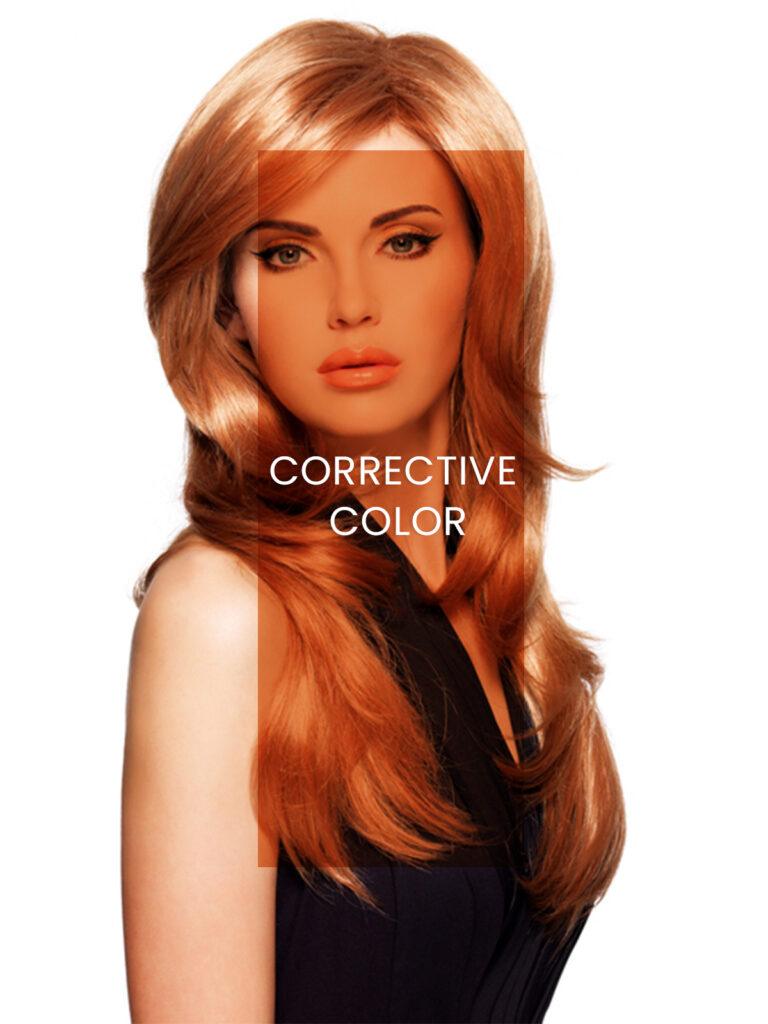
CORRECTIVE COLOR

Corrective color refers to fixing hair color mistakes, correcting damaged hair, or addressing color issues built up over time.

Common reasons for needing corrective color include:

  • Over-coloring or over-processing hair
  • Mishaps with at-home color, such as using the wrong color or leaving the color on for too long
  • A new color is not turning out as expected
  • Uneven fading of a hair color
  • Damage from bleach or other harsh chemicals

The corrective color process often requires multiple steps and may take several visits to a professional stylist.

Service time: ** Requires a Consultation **

Great for: Restoring hair to a healthy, vibrant state.

*Service time can vary depending on the length/density of hair and the stylist’s timing needs.

SHINE ENHANCEMENT

Shine enhancement, also known as Hair Glossing, is a treatment that boosts the hair’s natural shine and vibrancy.

This is typically an add-on service that prolongs and enhances your hair color. Clear glosses boost shine and definition, while color glosses refresh color-treated hair and combat dullness or brassiness.

Shine enhancement treatments are suitable for all hair types, but they can be especially beneficial for color-treated hair or those looking to combat dullness or brassy tones.

Service time: Approx. 30 mins

Great for: Boosting the hair’s natural shine and vibrancy.

Vivid Color

Vivid hair color refers to bold and unconventional shades that go beyond traditional hair colors like blonde, brunette, or red. These vivid colors are intended to make a statement and stand out from the crowd. Some examples of vivid hair colors include electric blue, neon pink, emerald green, and more.

Vivid hair color isn’t just about the vibrant shades themselves; it’s also about how they are applied. Creative techniques like color melting, balayage with vivid tones, or intricate patterns can create unique and eye-catching looks.

Service time: ** Requires a Consultation **

Great for: This is an excellent choice for those who want to break away from traditional hair colors and express their creativity and individuality.

*Service time can vary depending on the length/density of hair and the stylist’s timing needs.

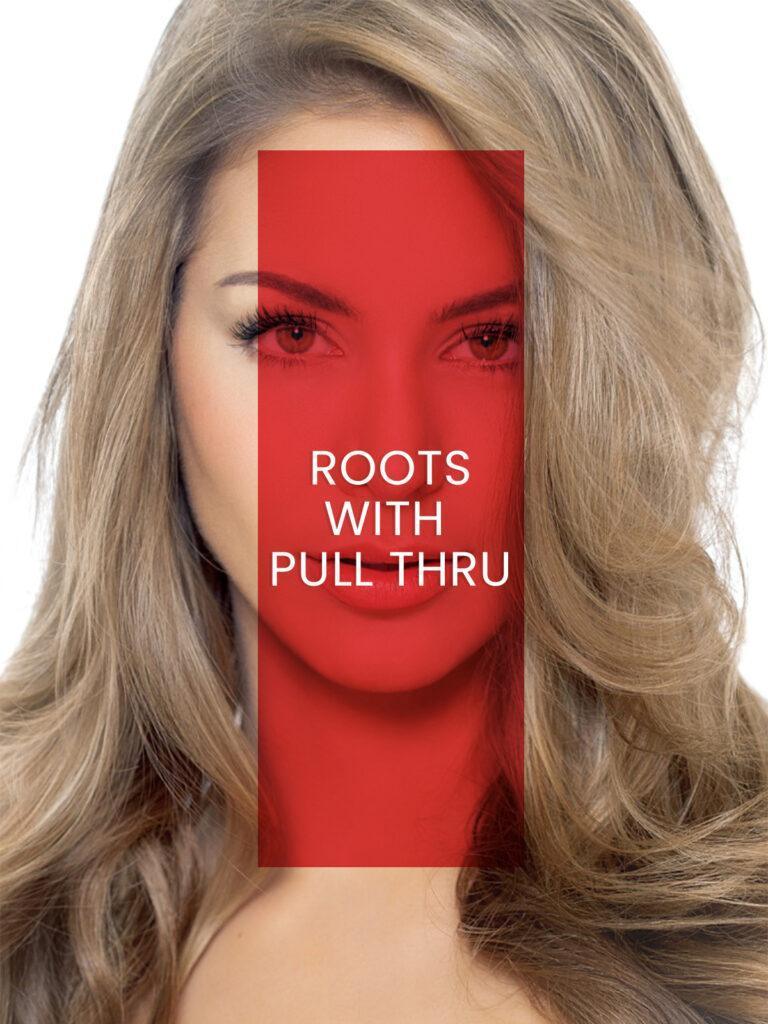
ROOTS WITH PULL THROUGH

A root retouch with pull through color is a hair coloring technique that combines two processes: a root touch-up and pulling the color through the mid-lengths and ends of the hair. This technique is used to blend the new growth at the roots with the rest of the hair while also refreshing the overall hair color.

The process begins with a root touch-up, where hair dye is applied to the regrowth at the base of the hair shaft, also known as the “roots.”   After the root touch-up, the hair color is then “pulled through” the mid-lengths and ends of the hair. This step helps to refresh the hair color, add shine, and ensure an even distribution of color from root to tip.

Service time: Approx. 1 hour 30 mins

Great for: Beneficial for those who want to extend the time between full hair coloring appointments or for those who have hair highlights.

*Service time can vary depending on the length/density of hair and the stylist’s timing needs.

FOILS

Foils, also known as highlights, are a hair coloring technique that involves sectioning off strands of hair and applying color to those sections using small, rectangular pieces of foil to separate the colored sections from the rest of the hair. This technique adds dimension, depth, and texture to the hair by creating lightened strands that contrast with the base color.

Partial Foil:  Partial foil, also known as half-head foil or partial highlights, involve coloring from the crown of the head and framing the face.

Full Foil: Full foil, also known as full head foil or full highlights, involves highlighting and coloring evenly throughout from the top of the head to the nape of the neck.

Service time: : Approx. 1 hour (Partial)   2 hours (Full)

Great for: Partial Foils are best for those who want a more subtle, natural-looking effect or for those who want to add dimension and depth to their hair without committing to an all-over color change.

*Service time can vary depending on the length/density of hair and the stylist’s timing needs.

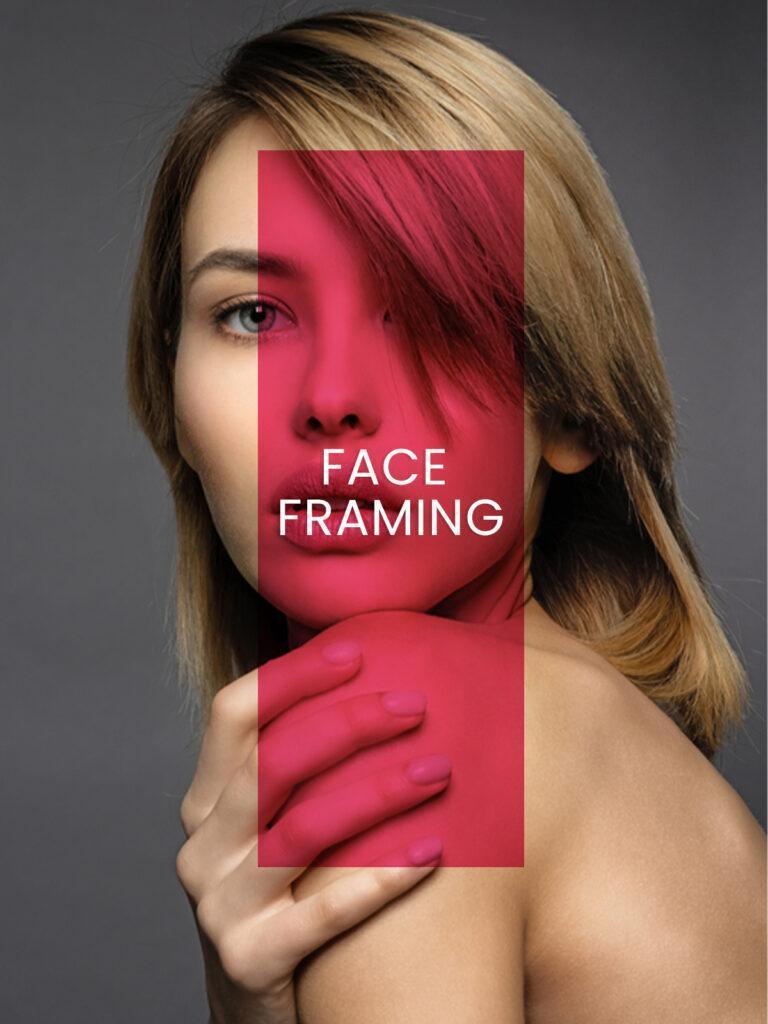
FACE FRAMING

Face framing refers to strategically placing individual highlights around the face to create a flattering and illuminating effect. Face framing is also a foiling version with less commitment than a partial or complete foil.

For example, placing lighter shades of color around the face can brighten up the complexion and add dimension to the overall hair color. This technique is particularly effective for those with darker hair who want to add warmth and depth to their look.

Service time: 60 mins

Great for: Bringing attention to the features of the face and complementing the overall hair color.

*Service time can vary depending on the length/density of hair and the stylist’s timing needs.

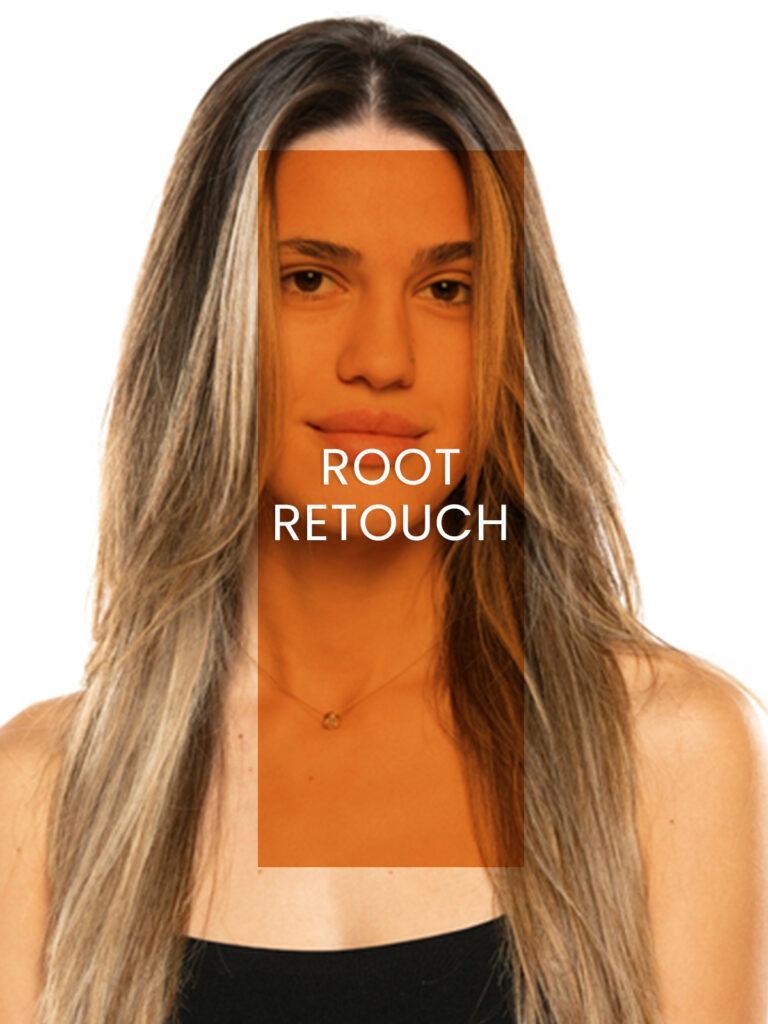
ROOT RETOUCH

A root retouch color, also known as a root touch-up, is a hair coloring technique that focuses on applying color to the new growth of hair at the roots. This process helps to blend the roots with the rest of the hair, ensuring a seamless transition between the natural hair color and the previously colored hair.

The main purpose of a root retouch color is to maintain a consistent, uniform color from root to tip, which makes it appear as if your hair has not grown out since the initial coloring.  A proper retouch routine can also help minimize damage caused by excessive coloring, allowing you to enjoy your beautiful hair color without compromising your hair’s health.

Service time: Approx. 1 hour

Great for: Great for: Maintaining a consistent, uniform color from root to tip, which makes it appear as if your hair has not grown out since the initial coloring.

*Service time can vary depending on the length/density of hair and the stylist’s timing needs.

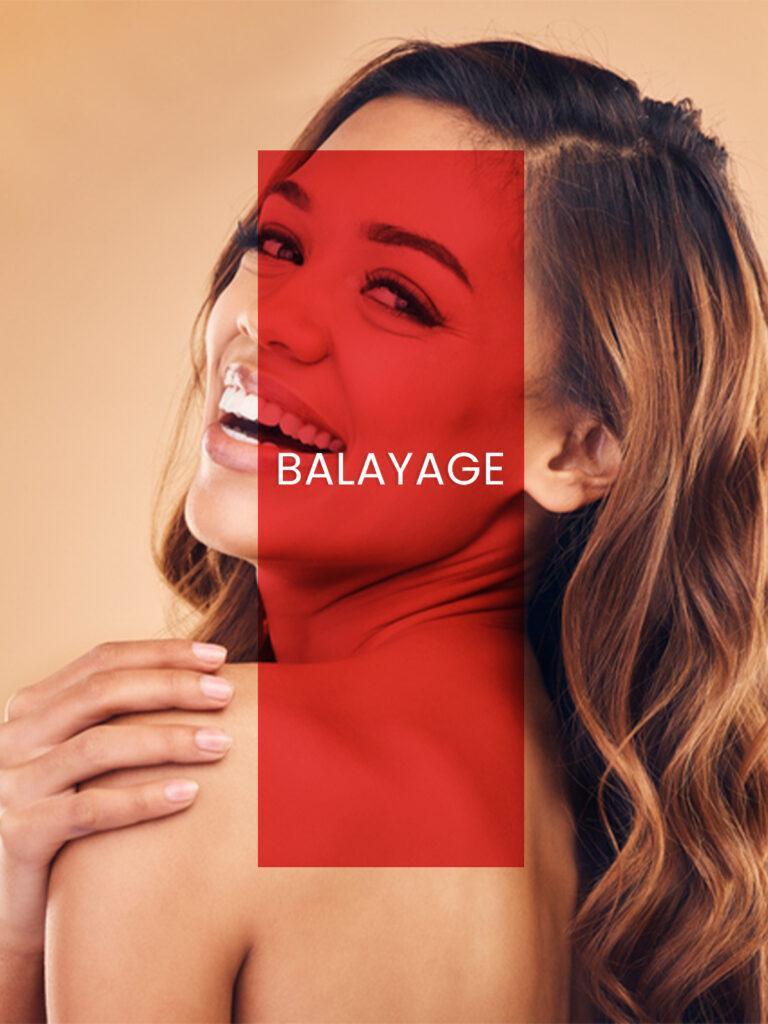
BALAYAGE

A root retouch color, also known as a root touch-up, is a hair coloring technique that focuses on applying color to the new growth of hair at the roots. This process helps to blend the roots with the rest of the hair, ensuring a seamless transition between the natural hair color and the previously colored hair.

The main purpose of a root retouch color is to maintain a consistent, uniform color from root to tip, which makes it appear as if your hair has not grown out since the initial coloring.  A proper retouch routine can also help minimize damage caused by excessive coloring, allowing you to enjoy your beautiful hair color without compromising your hair’s health.

Service time: Approx. 1 hour

Great for: Great for: Maintaining a consistent, uniform color from root to tip, which makes it appear as if your hair has not grown out since the initial coloring.

*Service time can vary depending on the length/density of hair and the stylist’s timing needs.